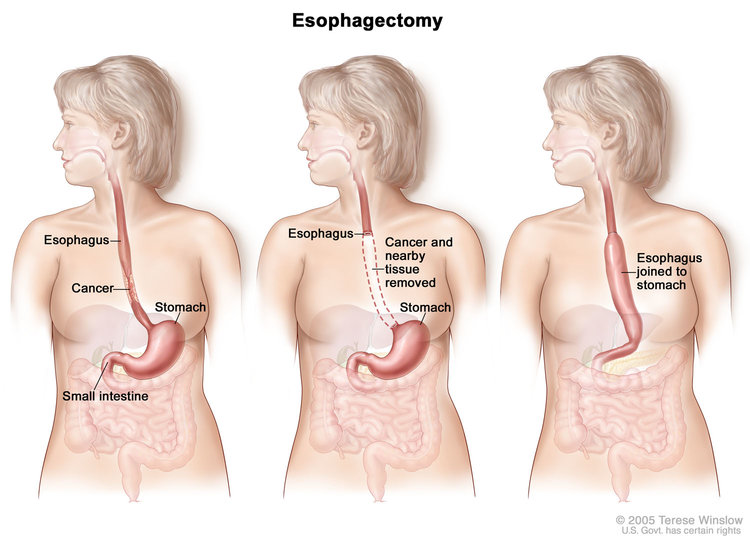
Esophagectomy is a surgical procedure to remove some or all of the swallowing tube between your mouth and stomach (esophagus) and then reconstruct it using part of another organ, usually the stomach. Esophagectomy is a common treatment for advanced esophageal cancer and is used occasionally for Barrett's esophagus if aggressive precancerous cells are present. An esophagectomy may also be recommended for noncancerous conditions when prior attempts to save the esophagus have failed, such as with end-stage achalasia or strictures, or after ingestion of material that damages the lining of the esophagus.
Esophageal cancer is the 10th most common cancer in the world. It starts in the tissues in your esophagus, the long muscular tube that moves food from your throat to your stomach. Tumors caused by esophageal cancer may not cause noticeable symptoms until the cancer has spread. Healthcare providers treat early-stage esophageal cancer with surgery to remove the tumors or ease symptoms. They may use treatments such as chemotherapy, radiation therapy and immunotherapy to treat more advanced or later-stage esophageal cancer. When they can’t cure the cancer, they focus on helping people live longer, easing symptoms and maintaining quality of life. Medical researchers are working on treatments that will help people with esophageal cancer live longer.
Surgery: An esophagectomy is the most common treatment for early-stage esophageal cancer. It involves removing some or most of your esophagus and surrounding tissue. Surgeons create a new esophagus by pulling up part of your stomach into your chest and neck.
Radiation Therapy: Radiation kills or damages cancer cells by aiming a radiation beam at the tumor. Healthcare providers may use radiation as adjuvant therapy before or after surgery.
Chemotherapy: Chemotherapy kills cancer cells or stops them from growing.
Endoscopic Submucosal Dissection (ESD): Surgeons may use ESD to treat very early-stage esophageal cancer.
Endoscopic Mucosal Resection (EMR): Surgeons use this procedure to remove tumors in the mucous lining of your esophagus.
Endoscopic Laser Therapy: This treatment eases symptoms when tumors may block your esophagus, making it hard for you to swallow.
Photodynamic Therapy (PDT): Photodynamic therapy destroys tumors with drugs called photosensitizers. Light activates these drugs and creates a chemical reaction that kills cancer.
Targeted Therapy: Some esophageal cancer cells carry an unusually high amount of the HER2 protein. This protein helps cancer cells grow. In targeted therapy, healthcare providers treat esophageal cancer with drugs targeting HER2 proteins.
Immunotherapy: This treatment involves immune checkpoint inhibitors. These drugs help restore your immune system’s response to esophageal cancer cells.
